
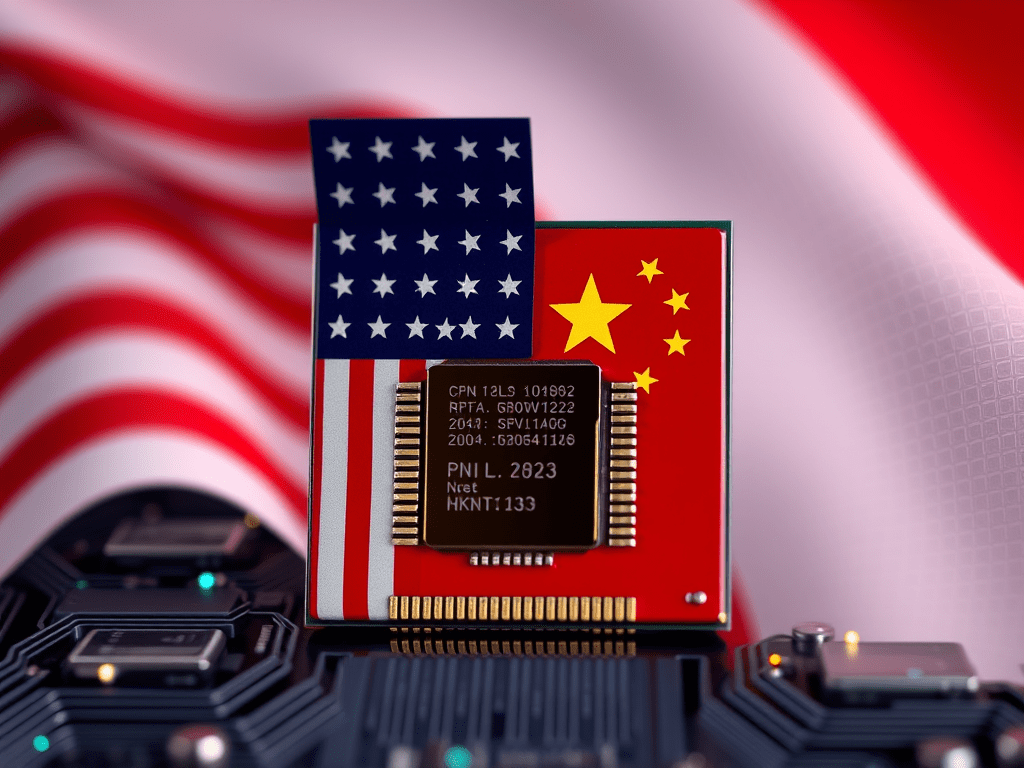
In recent years, artificial intelligence has shifted from a niche field to a global arms race, with countries investing billions in data centers, cloud computing, and the semiconductors that power it all. But behind the scenes, economic levers like tariffs are quietly but powerfully reshaping who gets access to cutting edge AI and how fast innovation can move.
One of the biggest flashpoints? U.S. tariffs on chip manufacturing and exports, particularly those targeting China and Chinese-affiliated firms.
A Quick Recap: Why Chips Matter
Modern AI models—think ChatGPT, autonomous driving algorithms, and real-time language translation—are hungry for computing power. At the heart of that power are advanced chips, especially GPUs (graphics processing units) and custom silicon like TPUs (tensor processing units). These chips are primarily manufactured by a handful of companies, notably NVIDIA, AMD, and Taiwan’s TSMC.
Control over chip supply = control over AI capabilities.
The Tariff Game: What’s Happening?
Over the past few years, the U.S. government has implemented a series of export controls and tariffs aimed at slowing China’s access to high-performance chips. The goal: prevent China’s military and surveillance apparatus from leveraging cutting-edge AI.
Tariffs have come in several forms:
- Export bans on advanced GPUs to Chinese firms.
- Increased tariffs on Chinese-made electronics and semiconductor components.
- Subsidies and incentives for U.S. chip manufacturers via the CHIPS and Science Act, meant to reduce reliance on foreign fabrication.
While the policies are designed with national security in mind, the economic ripple effects are being felt across the globe.
Bottlenecks and Backlogs
Tariffs and export controls have created chokepoints in the supply chain. AI firms that once relied on Chinese contract manufacturing or low-cost components are now scrambling to find alternatives. This has led to:
- Rising costs for GPUs and server infrastructure.
- Delays in AI model training due to chip shortages.
- Increased competition for limited supply from TSMC and other foundries.
Even U.S.-based AI startups and cloud companies are feeling the heat, as prices for top-tier chips like NVIDIA’s H100 have soared due to limited supply.
The Push for “Onshore” Infrastructure
To counteract reliance on Asia—particularly Taiwan—the U.S. is investing heavily in domestic chip production. Intel, Micron, and TSMC are all building or expanding fabs in the U.S., thanks in part to government funding and tax incentives.
But building fabs takes years, not months. In the short term, AI developers are stuck paying more and waiting longer.
Global Realignment
Countries outside the U.S.-China rivalry—like India, Vietnam, and members of the EU—are positioning themselves as neutral alternatives for chip assembly, R&D, and data center growth. We’re seeing:
- Relocation of supply chains to Southeast Asia.
- Partnerships between Western firms and non-Chinese entities to build secure AI pipelines.
- Strategic hoarding of GPUs by tech giants with the resources to stockpile.
Innovation at Risk?
With supply strained and costs ballooning, smaller players in the AI ecosystem are being squeezed out. Startups, academic labs, and independent researchers are struggling to get access to the compute power needed to build new models or conduct novel research.
Meanwhile, Big Tech firms with deep pockets (e.g., Microsoft, Amazon, Google) are consolidating control over both infrastructure and talent.
In essence: tariffs may be strengthening national security, but they’re also increasing inequality in who gets to build the future of AI.
Final Thoughts
U.S. tariffs on chips are doing more than just slowing China’s AI development—they’re reshaping the global AI landscape in profound ways. Supply chain shifts, rising infrastructure costs, and a growing compute divide are just a few of the side effects of this geopolitical strategy.
As policymakers and tech leaders navigate this new terrain, the challenge will be balancing national security with global innovation—and ensuring that the next wave of AI isn’t limited to just a few powerful players.




 Patrick Redknap . BLOG
Leave a comment